What is brand activation?
By the foodtruckrentals.com activation team · Updated 2026-09-13
Brand activation is a marketing effort that brings people into direct contact with a brand to drive a specific action, awareness, trial, or affinity, rather than just showing them a message. Instead of telling an audience about the brand, an activation lets them experience it firsthand.
We run activations for a living, mostly through custom-wrapped food trucks, so this guide is written from the operator’s side of it: what the term actually means, what the main formats are, real examples, and how a good one comes together. If you already know you want to run one, see how we build branded activations.
Brand activation vs. experiential marketing
The two terms get used interchangeably, and that is mostly fine. Experiential marketing is the broad discipline: marketing through live, participatory experiences. A brand activation is usually the specific campaign or moment inside it. If experiential marketing is the strategy, the activation is the day it happens on. Marketing activation means the same thing, with the emphasis on turning awareness into action.
What separates an activation from an ad is participation. An ad asks for a glance. An activation asks for a minute, a taste, or a step inside, and it is that exchange that makes the brand stick.
Types of brand activation
Experiential activations
In-person experiences people walk into: pop-ups, sampling, installations, and mobile builds like a wrapped food truck. The category most people mean by “activation.”
Product sampling
Putting the product directly in hands. Trial is the point, and the setting is chosen to reach the right crowd at the right moment.
Retail & in-store
Bringing a moment to a store frontage or floor to turn passers-by into foot traffic and shoppers into participants.
Event & sponsorship
A branded presence at a festival, conference, or cultural moment where the audience is already gathered.
Digital & social
Activations built to be shared: a physical moment engineered to travel as posts, tags, and stories afterward.
Cause & community
Tying the brand to a real-world act or local partnership so participation, not just exposure, carries the message.
Brand activation examples
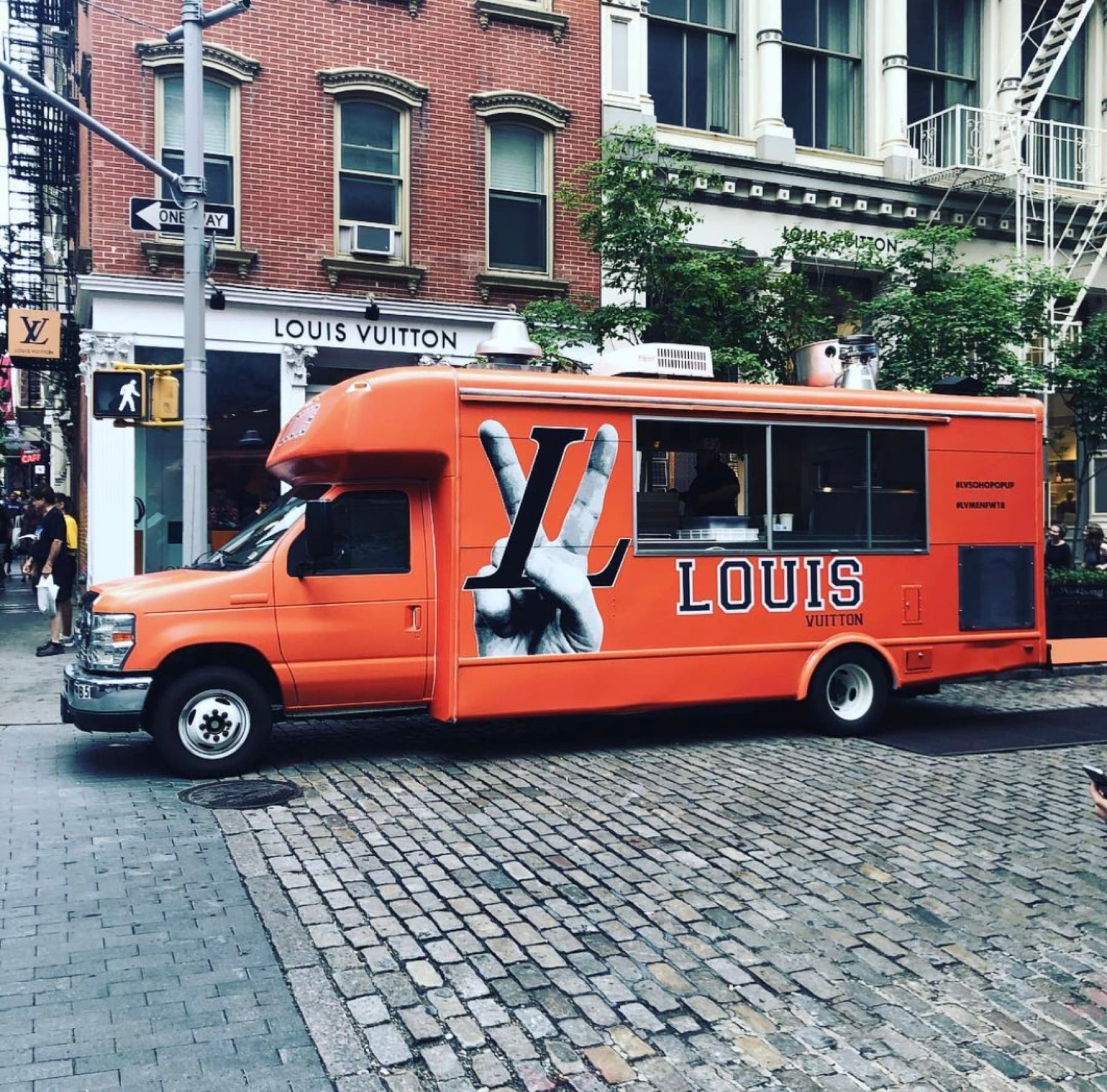
The clearest way to understand activations is to see the range. A luxury house parks a monogram-wrapped truck outside its own flagship during fashion week. A three-Michelin-star kitchen puts its food on a truck and feeds the city. A retailer wraps a holiday truck and stations it under the store marquee for a season. Different goals, same mechanism: a physical moment the audience walks into.
Twelve of them, with photographs and what each format costs today, are on the brand activation examples page. For the wider campaign category, see experiential marketing examples.
Brand activation ideas
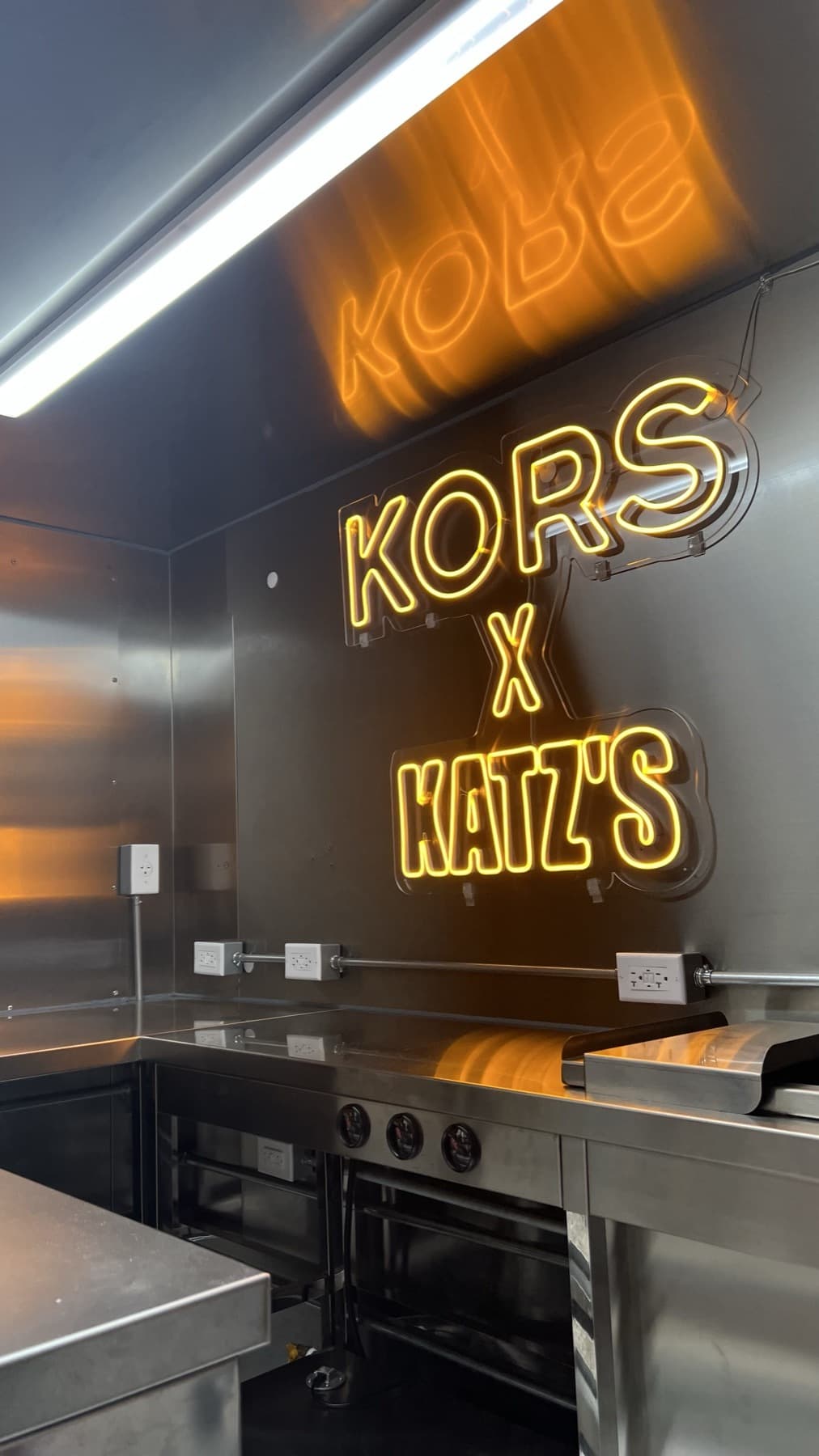
A wrapped food truck
A moving storefront that advertises on the drive and hands out product when it parks. The format we run most.
A pop-up with a giveaway
A short-run physical space anchored by something worth queuing for, from a limited product to a made-to-order item.
A multi-market tour
One build that seeds launch after launch across cities, amortizing the creative across every stop.
How to run a brand activation
Set the outcome
Decide what the day is for before anything else: trial, reach, launch buzz, or a market to own. It shapes every later call.
Pick the format
Match the vehicle to the goal. Sampling wants a truck that draws a line; awareness wants a wrap that reads from across the street.
Choose the place & time
Go where the audience already is, on the day they are there. The corner and the calendar matter as much as the creative.
Staff and permit it
Trained ambassadors run the moment; permits, insurance, and a legal spot keep it from becoming a logistics fire.
Measure it
Capture impressions, footfall, samples, and earned media so the activation can be defended internally and repeated.
What each of those steps costs, and what moves the number, is on the brand activation cost guide.
Glossary
- Brand activation
- A marketing effort that brings people into direct contact with a brand to drive a specific action, awareness, trial, or affinity, rather than just showing them a message.
- Experiential marketing
- The broader discipline of marketing through live, participatory experiences. A brand activation is usually the individual campaign or moment within it.
- Marketing activation
- Used interchangeably with brand activation. It emphasizes the “activating” part: turning strategy and awareness into a concrete moment that prompts action.
- Pop-up
- A temporary physical presence, from a day to a few weeks, used to create urgency and a reason to show up now.
- Sampling
- Distributing product directly to people so they try it firsthand, the most direct way to convert awareness into trial.
- Footfall / dwell time
- Footfall is how many people an activation drew in; dwell time is how long they stayed. Together they separate being seen from being engaged.
Brand activation FAQs
- What does activation mean in marketing?
- In marketing, an activation is a moment that turns awareness into action. Advertising tells an audience something; an activation gives them something to do, taste, or take part in, and then measures what came of it. The word is used on its own ("we are running an activation") as shorthand for that live, in-person moment, whether it is a sampling push, a pop-up, a launch event, or a wrapped truck parked where the audience already walks.
- What is brand activation?
- Brand activation is a marketing effort that brings people into direct contact with a brand to drive a specific action, whether that is trying a product, remembering a launch, or feeling closer to the brand. Instead of showing an audience a message, an activation gives them something to do, taste, or take part in. A custom-wrapped, staffed food truck is one of the most effective formats, because it drives to where the audience is and hands them a reason to stop.
- What is brand activation in marketing?
- In marketing, brand activation is the stage where strategy and awareness turn into a concrete, in-person moment that prompts action. It sits downstream of positioning and advertising: the ad tells people about the brand, the activation lets them experience it. The goal is measurable, trial, footfall, sampling, and earned media, not just impressions.
- What are some examples of brand activations?
- Common examples include product sampling at a high-traffic corner, a pop-up store with a limited giveaway, a festival sponsorship with an interactive booth, and a wrapped food truck touring several markets. The through-line is participation: the audience does something rather than just watches.
- What is the difference between brand activation and experiential marketing?
- Experiential marketing is the broad discipline of marketing through live, participatory experiences. A brand activation is usually the specific campaign or moment within it. In practice the terms are used interchangeably, but “activation” tends to point at the individual event and its outcome, while “experiential marketing” names the overall approach.
- What are some brand activation ideas?
- Strong ideas start from the goal, not the gimmick. For trial, a sampling truck that draws a line; for awareness, a wrapped vehicle that advertises on the move; for a launch, a pop-up anchored by something worth queuing for; for a market push, a multi-city tour on one build. The best idea is the one that puts your specific audience within arm’s reach of the product.
- How do you measure a brand activation?
- Measure it the way you would any media buy: impressions earned in transit and on site, sidewalk footfall, samples or product distributed, and the social and earned media the moment generated. Reporting these back turns an activation from a memorable day into a defensible line in the budget.
Thinking about an activation?
Tell us the brand and the goal; we’ll propose the format and scope it.
Related: Experiential MarketingBranded Food TrucksFood Truck AdvertisingExamplesCost