Brand activation examples
By the foodtruckrentals.com activation team · Updated 2026-09-13
Brand activation examples range from a wrapped truck parked outside a flagship store to a live-streamed jump from the edge of space. The twelve below are grouped by type, with the goal each one served and the tier that format is quoted at today. Seven are activations we ran in New York; five are the famous ones every list opens with.
Most example lists are written from press coverage. This one is written from the operator’s side: we built the trucks in the first seven, so the photographs are ours and the cost lines are real tiers from our published pricing, not a guess. If you want the definition first, start with what brand activation is; if you want the wider campaign category, the experiential marketing examples page covers formats beyond the single moment.
How to read the cost lines
We do not publish what a client paid; we publish the tier that format is quoted at now. An unbranded, staffed truck runs $1,500–$9,000 a day. A branded single-day activation, which is what most of the examples below are, runs from $10,000 and tops out around $45,000. Multi-day and multi-market campaigns start at $50,000. The wrap is the largest single line in a branded quote and is bought once, which is why a long run is cheaper per day than a short one.
Brand activation examples we ran
01 · Retail activation
Louis Vuitton: A flagship, parked at the flagship
Goal Reward in-store spend and extend the store onto the sidewalk
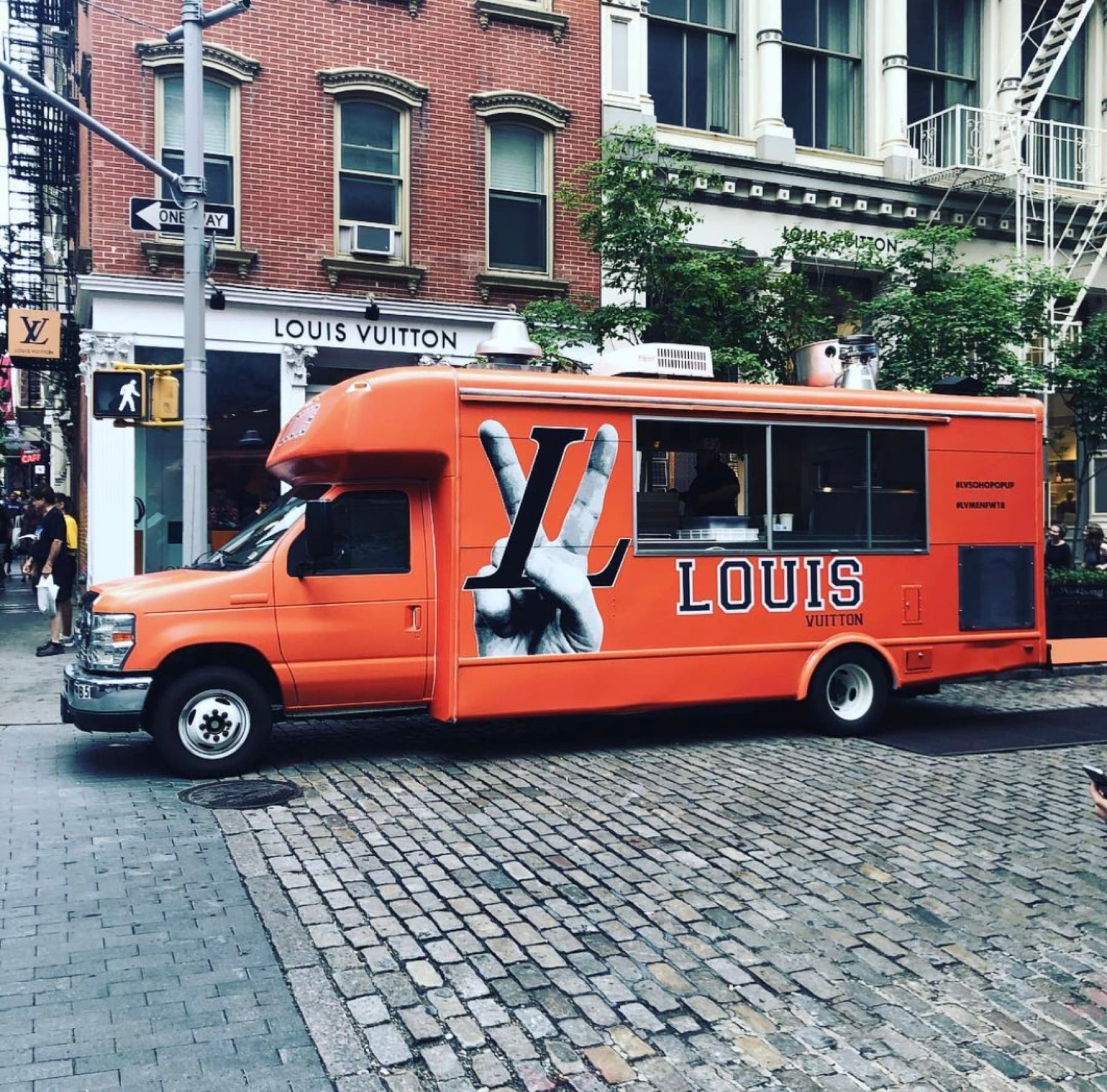
A full LV-monogram truck, wrapped and parked outside the SoHo flagship. Shoppers who hit a spend threshold inside were gifted a meal from the truck outside, which turned the pavement into part of the store and gave passers-by a reason to look up at the window.
It is the cleanest example of the retail type: the activation does not compete with the shop for attention, it pays out the shop. The wrap does the awareness work on its own; the reward mechanic does the conversion work.
What this format costs today
Branded single-day activation: From $10,000 · up to $45,000. The wrap is the largest line and is bought once.
02 · Retail activation, multi-month
Bloomingdale’s: Parked on repeat
Goal Turn holiday foot traffic into goodwill, and keep doing it
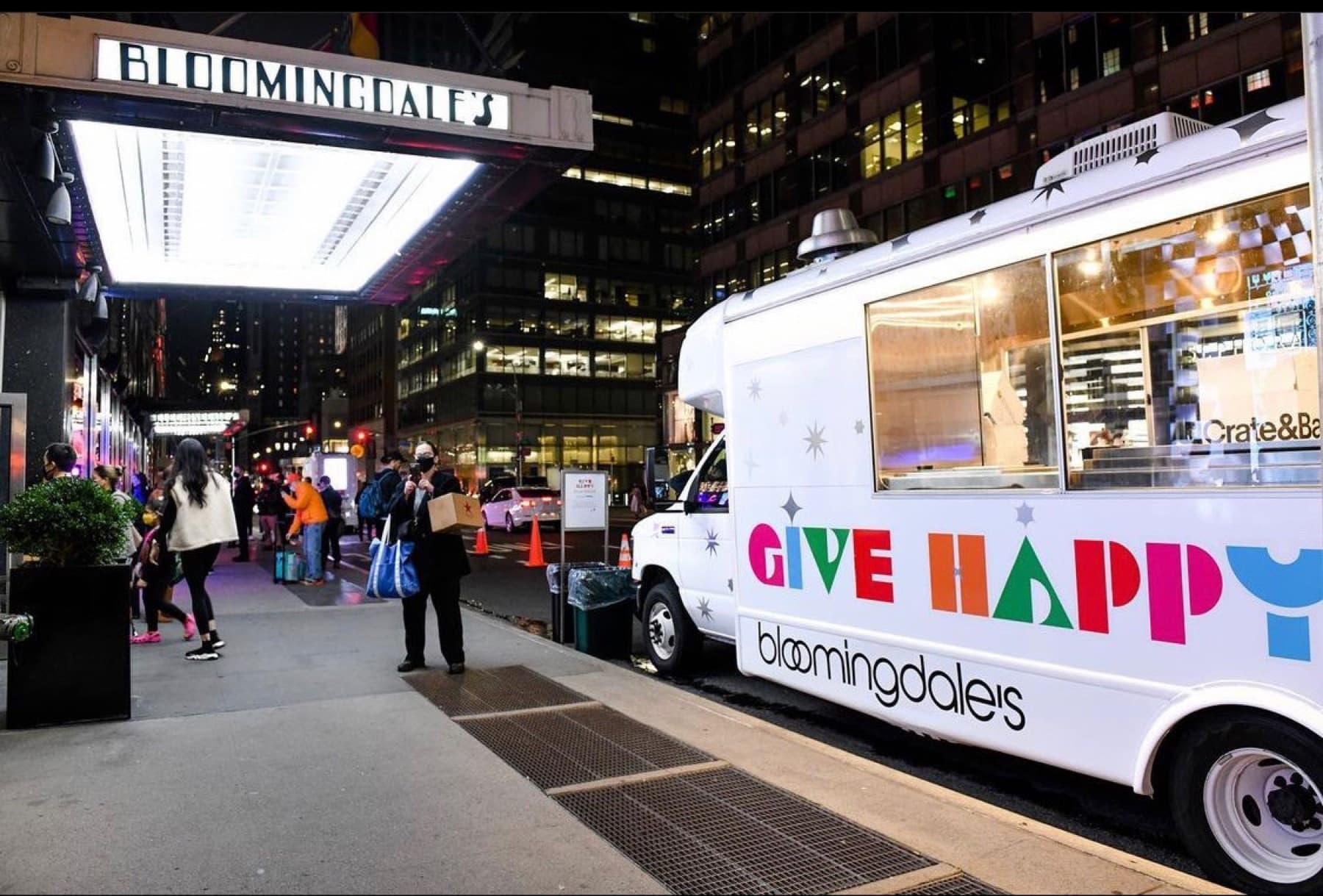
A repeat retail partner. Custom-wrapped trucks and carts ran across several month-plus activations under the store marquee, with free meals for shoppers who hit a spend threshold, the same mechanic as Louis Vuitton at a department-store scale.
What the length changes is the economics. A wrap that would be a one-day cost becomes a per-day rounding error over a season, and the truck stops being an event and becomes part of how the store looks in December.
What this format costs today
Multi-day / multi-market campaign: From $50,000. The per-day rate falls across a run; the wrap does not recur.
03 · Collaboration pop-up
Michael Kors × Katz’s Deli: Pastrami on the runway
Goal Give Fashion Week a moment worth photographing
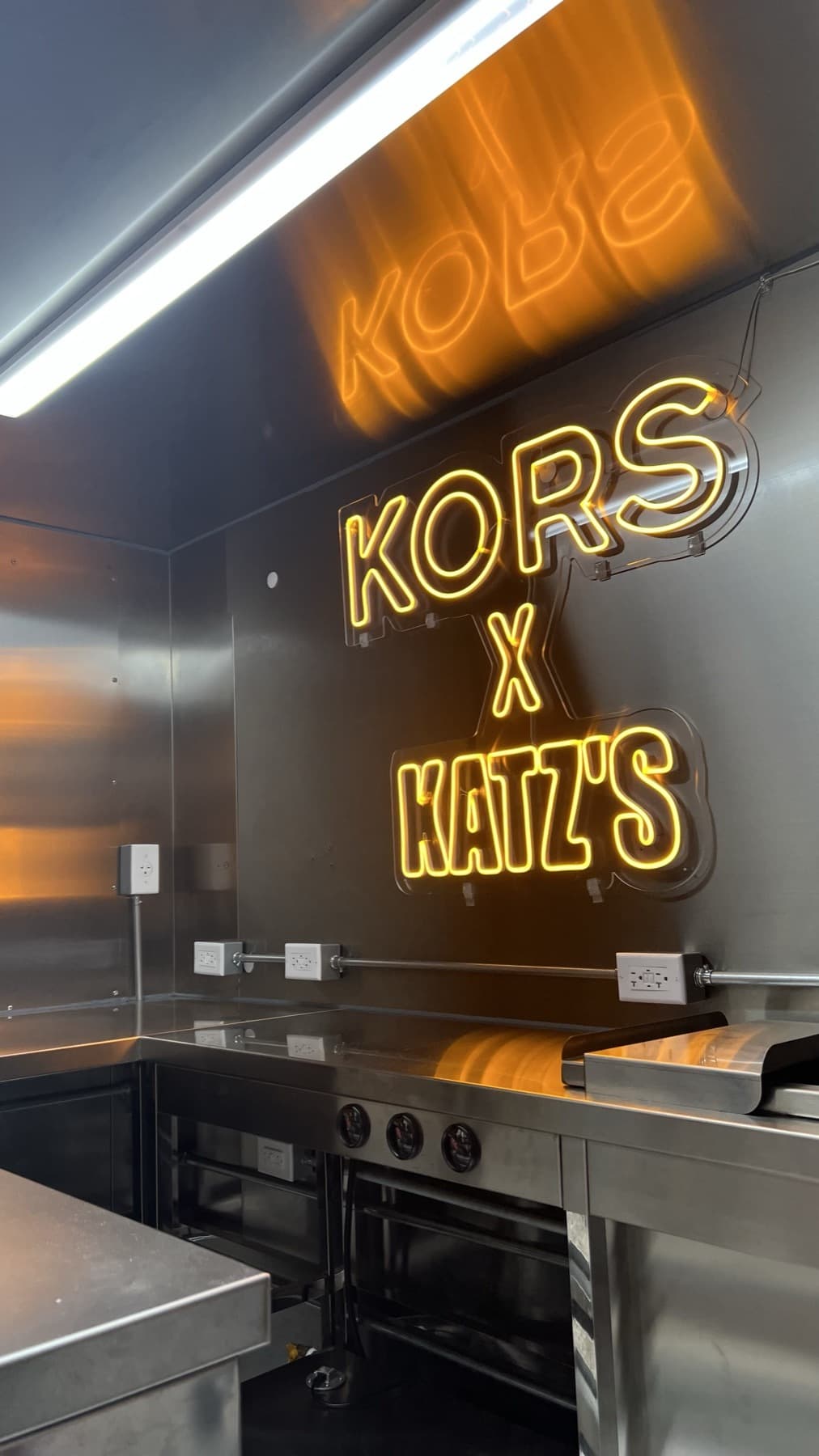
An LED-lit Michael Kors cart on a makeshift SoHo runway during Fashion Week, serving pastrami sandwiches in a collaboration with Katz’s Deli. Two New York names that had no business together, together, for a few hours.
This is the collaboration type in miniature. Neither brand had to explain itself; the pairing was the message, and the cart was small enough to sit where a truck could not. The unlikeliness is the point, and it is what got it shared.
What this format costs today
Branded single-day activation: From $10,000 · up to $45,000. A cart build sits at the lower end of the tier; the partner menu is quoted to headcount.
04 · Creator activation
Kendall Jenner: Eat your heart out
Goal Put a moment in front of fans that they would post themselves
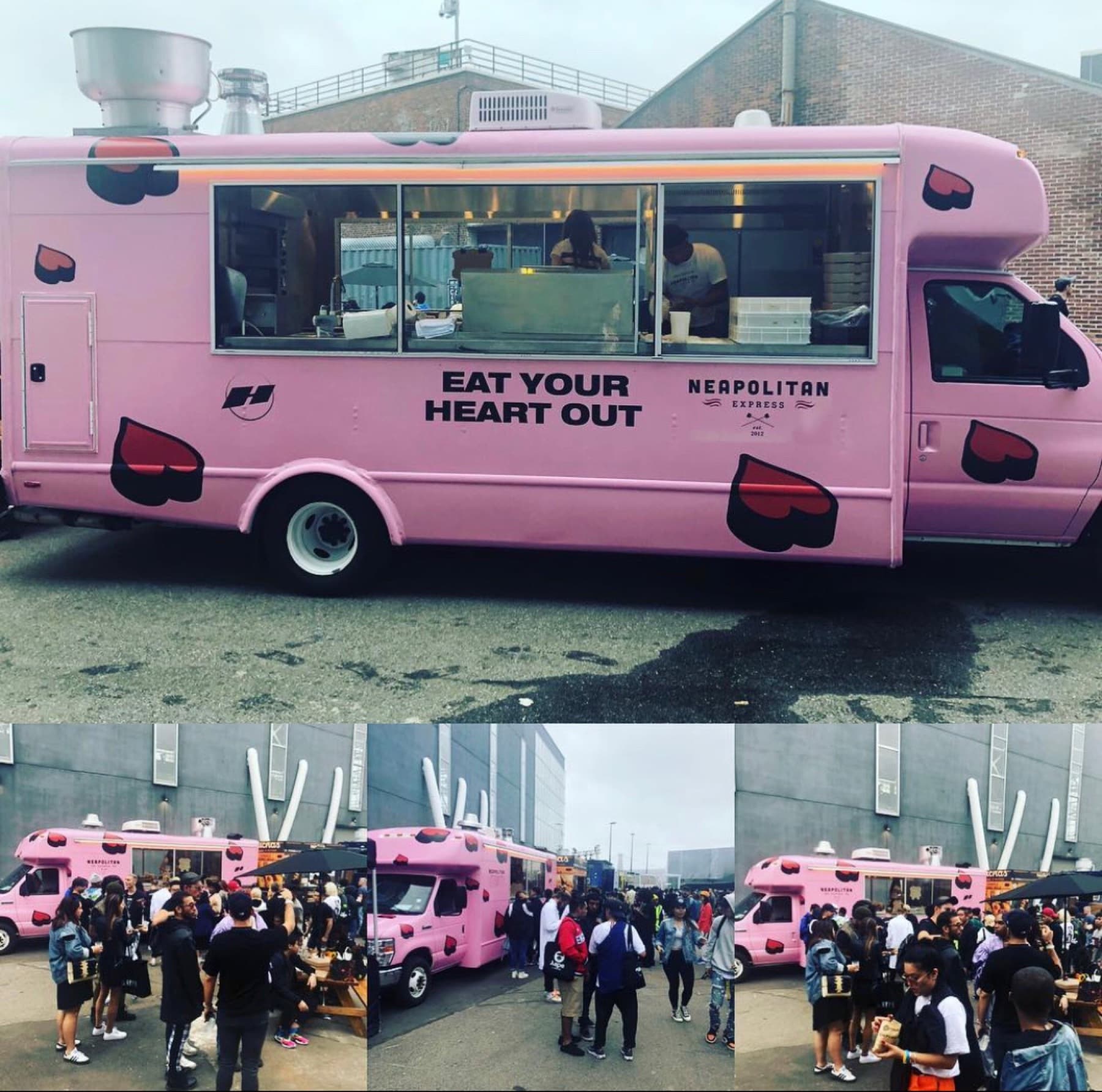
A full custom-wrapped truck built to be photographed, handing free meals straight to fans and passers-by. The creative was designed for the phone in the queue, not the person across the street.
Creator activations are the digital-and-social type with the vehicle as the set. The wrap has to read at arm’s length and survive a vertical crop, which is a different brief from a truck meant to be seen from a bus.
What this format costs today
Branded single-day activation: From $10,000 · up to $45,000. Design for the frame the audience will shoot in, not the one you approve on a monitor.
05 · Product sampling
Organic Valley: Sampling at lunch, in Midtown
Goal Get the product into hands at the hour and on the corner people eat

A street sampling activation in Midtown Manhattan: a wrapped sampling trailer with brand ambassadors on a weekday block, handing product to a crowd that was already out at lunch. No installation, no stunt, just placement and throughput.
Sampling is the type most likely to be judged on a spreadsheet, and the vehicle earns its keep there. It is parked where people are already deciding what to eat, so the sample arrives at the moment of hunger rather than in a lobby at 10am.
What this format costs today
Branded single-day activation: From $10,000 · up to $45,000. Product supplied by the brand; staffing and permits inside the day rate.
06 · Cause activation
Eleven Madison Park × Rethink: Make it nice, together
Goal Put a three-Michelin-star kitchen on the street for the people who needed it
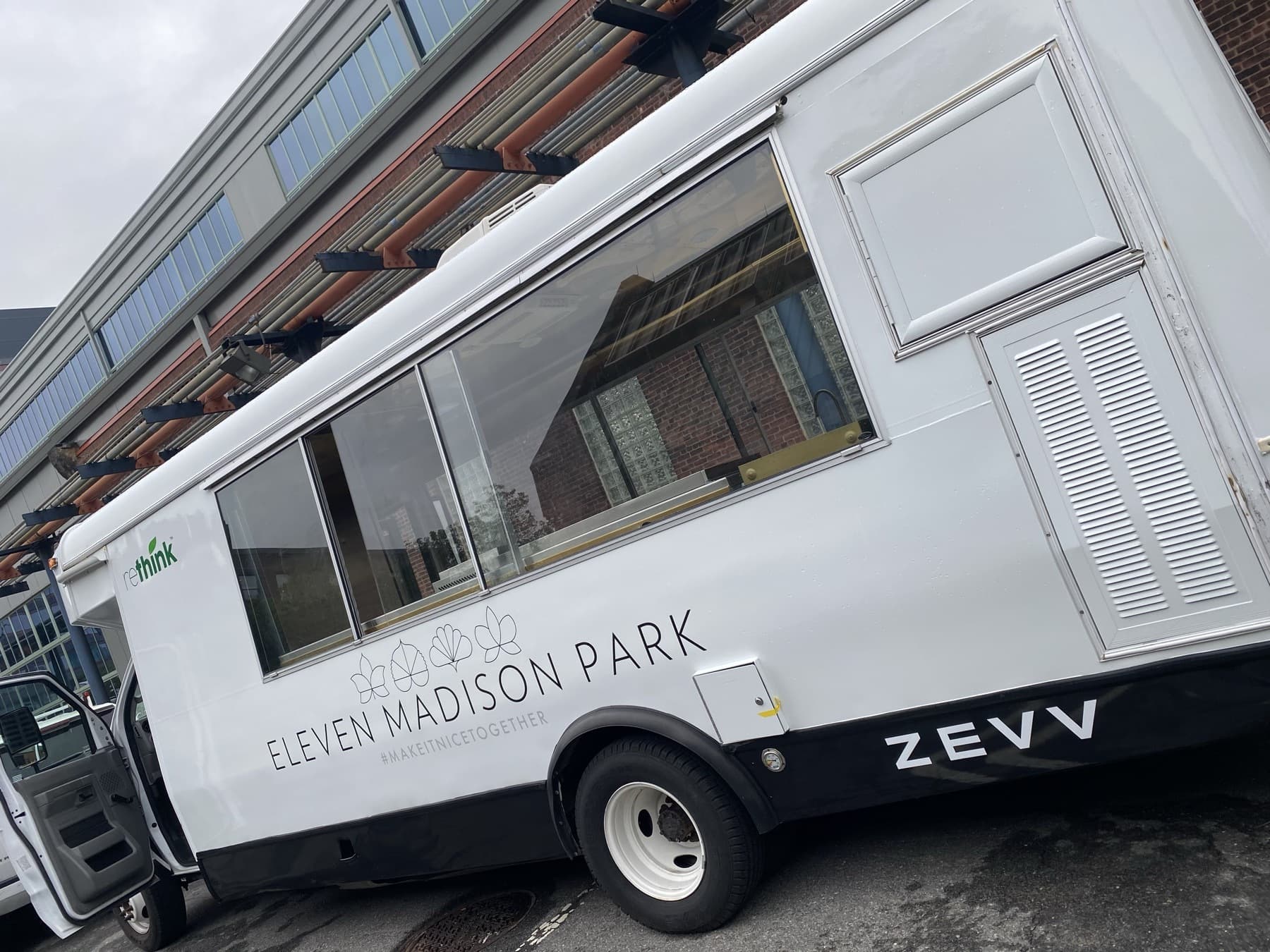
A custom-built truck with Chef Daniel Humm’s Eleven Madison Park and the nonprofit Rethink, serving 2,000-plus meals a week to underserved communities in the Bronx and Brooklyn.
The cause type inverts the usual mechanic. The audience is not being asked to buy; the brand is being seen to do something, and the truck is what makes the doing visible. It is the activation most often quoted back to us by brands who want their own version.
What this format costs today
Multi-day / multi-market campaign: From $50,000. Sustained runs are priced as a programme, not as days.
07 · Relief deployment
World Central Kitchen: Five trucks for the front line
Goal Feed first responders and hospitals at the height of COVID-19
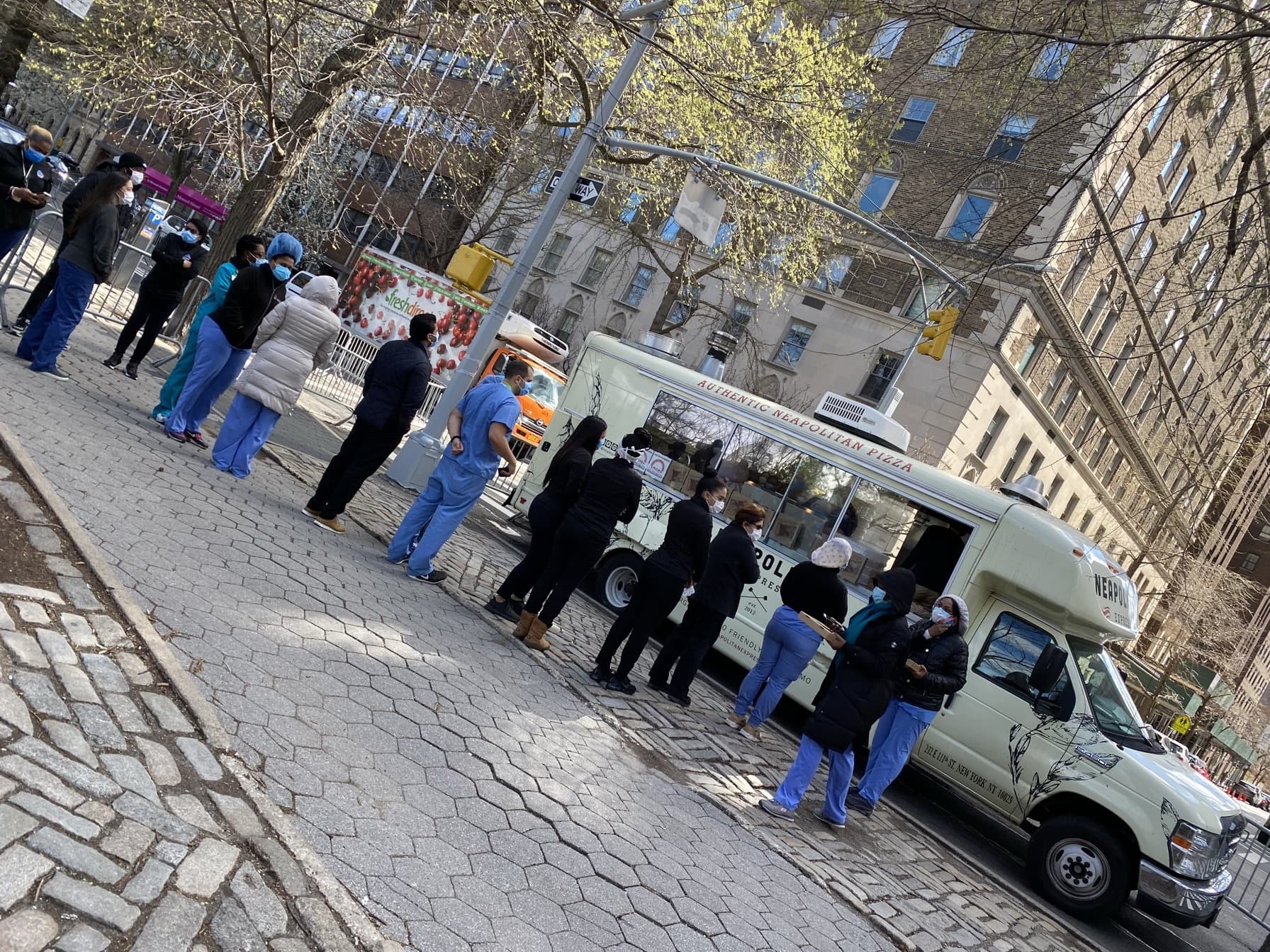
Five trucks deployed with World Central Kitchen and Chef José Andrés in 2020, feeding first responders and hospital staff across the city: 100,000-plus meals in all.
Not a marketing brief, and it belongs on this list because it is the same machine. Wrapped, staffed, permitted vehicles that can be somewhere by tomorrow are what a brand activation is made of, and this is what that capability looks like when the goal is not a brand.
What this format costs today
Quoted as a deployment. The mechanics are those of a multi-truck campaign.

The famous ones
Five activations that get cited in every list, one per type the fleet does not cover, described from the outside. They are here for the principle each one carries, not because any of them is a budget most brands have.
08 · Stunt / live event
Red Bull: Stratos
Goal Own a moment the whole internet watched at once
In 2012 Red Bull put Felix Baumgartner in a capsule under a helium balloon, lifted him to the edge of space, and streamed the jump live. Millions watched the fall in real time. The product barely appears.
The stunt type at its ceiling: a single event, engineered so that the brand is the only possible author of it. Almost nobody has this budget, but everybody has the principle, which is that the activation should be something only you would do.
What this format costs today
Not a format anyone quotes. Its lesson scales down; its budget does not.
09 · Personalised product
Coca-Cola: Share a Coke
Goal Make the product itself the reason to participate
Launched in Australia in 2011 and rolled out worldwide: the logo on the bottle replaced with first names. People hunted for their own, bought one for a friend, and posted the pair.
The activation lived inside the packaging rather than at an event, and the participation was the purchase. It is the clearest case of a brand turning a product into an act, which is what every activation is trying to do with a smaller lever.
What this format costs today
A packaging programme, not an event budget. The mechanic, a named reward, travels to any format.
10 · Pop-up / stunt
Barbie × Airbnb: The Malibu DreamHouse
Goal Give the launch a physical place that the coverage could stand in front of
A life-size, pink-to-the-rafters Barbie DreamHouse in Malibu, listed on Airbnb as a bookable stay around the 2023 film. Almost nobody stayed there; almost everybody saw it.
This is the pop-up type used as a press set. The bookings were the story, the house was the picture, and the activation existed so the launch had somewhere to be photographed. Wrapped trucks do the same job at a fraction of the footprint.
What this format costs today
A one-off build. The equivalent on a truck is a branded single-day activation, from $10,000.
11 · Installation / participation
Lean Cuisine: #WeighThis
Goal Reframe the brand around what the audience actually wanted to be measured by
A wall of scales in New York’s Grand Central Terminal, on which women wrote what they would rather be weighed by than a number: getting back into school, caring for a parent, a promotion. A brand that sold on weight loss stopped talking about weight.
An installation that asks the audience to make the content. The participation was the message, and the brand’s only job was to build the wall and stand back.
What this format costs today
A built installation in a high-traffic transit hall. Comparable in mechanics to a staffed pop-up at a plaza.
12 · Ticketed experience
Museum of Ice Cream: The brand that is the activation
Goal Sell the experience directly, and let the photographs sell the next one
Opened in New York in 2016 as a ticketed, room-by-room installation built for photographs: a sprinkle pool, pink everywhere. It sold out, moved cities, and became a brand in its own right.
The end of the spectrum where the activation is the product. Useful as a reminder that an experience people pay to enter is measured differently from one you hand them for free on a corner, and that both work.
What this format costs today
A ticketed venue. The free-sample corner is the opposite model, and the one most brands actually need.

What the twelve have in common
Participation. In every case the audience does something: hits a spend threshold, queues, writes on a scale, hunts for a bottle with their name on it. An activation that only asks for a glance is an ad with better catering.
Placement. The good ones happen where the audience already is, at the hour they are there. The SoHo flagship, a Midtown lunch corner, Grand Central at rush hour. The corner and the calendar do as much work as the creative.
A vehicle for the message. Sometimes literally. Seven of the twelve are built on a truck or a cart because a wrapped vehicle is an advertisement while it drives and a sampling station once it stops, and because it can be somewhere by tomorrow that a built set cannot.

Brand activation ideas, by goal
Start from the outcome, not the gimmick. Each of these is a format we run, matched to the goal it serves best.
- Trial
- A sampling truck on the corner where the audience already eats, at the hour they eat. The truck looks like lunch, the sample arrives at the moment of hunger. Product launches
- Retail footfall
- A wrapped truck under the store’s own marquee with a reward tied to spend inside. The pavement becomes the store’s front row. Mobile pop-up shops
- A launch
- A pop-up truck for a short, dense run: one location, a queue that forms and clears in a few hours, and a set worth photographing. Branded food trucks
- Awareness
- A wrap that reads from across the street, driven between locations so the transit is the media buy and the stop is the sample. Food truck advertising
- A market
- A multi-city tour on one build. The wrap is bought once; the second and third cities are cheaper per day than the first. Food truck marketing
- Goodwill
- A cause activation where the brand is seen to do something rather than say something, with the truck as the visible act. Eleven Madison Park × Rethink
What a brand activation costs
Our published tiers. The brand activation cost guide breaks each one into its line items and shows what pushes a quote up or down.
| Rental type | Price | Lead time | Best for |
|---|---|---|---|
| Unbranded event rental | $1,500–$9,000 per day | 2–3 weeks typical | Corporate events, private parties, weddings, and festivals that need a truck without custom branding. |
| Branded single-day activation | From $10,000 · up to $45,000 | 3–6 weeks typical | Brand launches, product launches, and experiential marketing that needs a branded, photographable moment. |
| Multi-day / multi-market campaign | From $50,000 | 4+ weeks | Sustained campaigns, tours, and multi-market activations. |
Add-ons, quoted to the brief
- Custom truck wrap
- $5,000–$15,000+
- Full or partial. A one-time cost, reused across every day of a run.
- Permitting, insurance & location scouting
- $1,000–$5,000+
- Included in full-service activations. Varies by location and requirements.
- Additional trucks
- Quoted per truck
- For larger headcounts or multi-site coverage on the same day.
- Catering (menu, staff, service)
- Quoted to headcount
- Optional, never required. Bring your own chef or menu if you prefer.
Every figure above is published planning guidance, not a quote. Pricing is scoped to the brief, the market, the dates, the footprint, and whether the truck carries your creative. We send one itemized number with nothing buried in it.
Brand activation examples FAQs
- What are some famous brand activations?
- The ones every list opens with are Red Bull Stratos, the live-streamed 2012 jump from the edge of space; Coca-Cola’s Share a Coke, which put first names on bottles; Barbie’s Malibu DreamHouse listed on Airbnb around the 2023 film; Lean Cuisine’s #WeighThis wall of scales in Grand Central; and the Museum of Ice Cream, a ticketed installation that became a brand. Each is a different type: stunt, personalised product, pop-up, participatory installation, paid experience.
- What makes a brand activation successful?
- Three things, in order. Participation: the audience does something rather than watches something. Placement: it happens where and when the audience already is, not where the brand would like them to be. Proof: it is measured in footfall, samples, and earned media so it can be defended internally and repeated. Creative matters, but a beautiful activation on an empty corner is a photo shoot.
- What is the difference between a brand activation and a pop-up shop?
- A pop-up shop is one type of brand activation, the one where the format is a temporary retail space and the action is buying. Activations also include sampling, installations, stunts, sponsorships, and mobile builds like a wrapped truck. A pop-up on wheels sits in both categories: it is a shop, and it drives.
- How long does a brand activation last?
- From a few hours to a season. A launch pop-up truck runs a single afternoon; a sampling push runs a day or a weekend; a retail activation like the Bloomingdale’s holiday trucks ran month-plus. Length changes the economics more than anything else, because the wrap is a one-time cost that spreads across every day of a run.
- Can a small brand run a brand activation?
- Yes, and the truck formats are where it is most possible. A branded single-day activation in New York starts at $10,000 wrapped, staffed, and permitted, and an unbranded staffed truck starts at $1,500. The mechanics that made Louis Vuitton’s activation work, a reward tied to an action in a place the audience already was, cost nothing extra to copy.
Want one of these with your name on it?
Tell us the brand and the goal; we’ll propose the format and quote it within 48 hours.
Related: What Is Brand Activation?Experiential Marketing ExamplesBrand Activation CostAll Case Studies