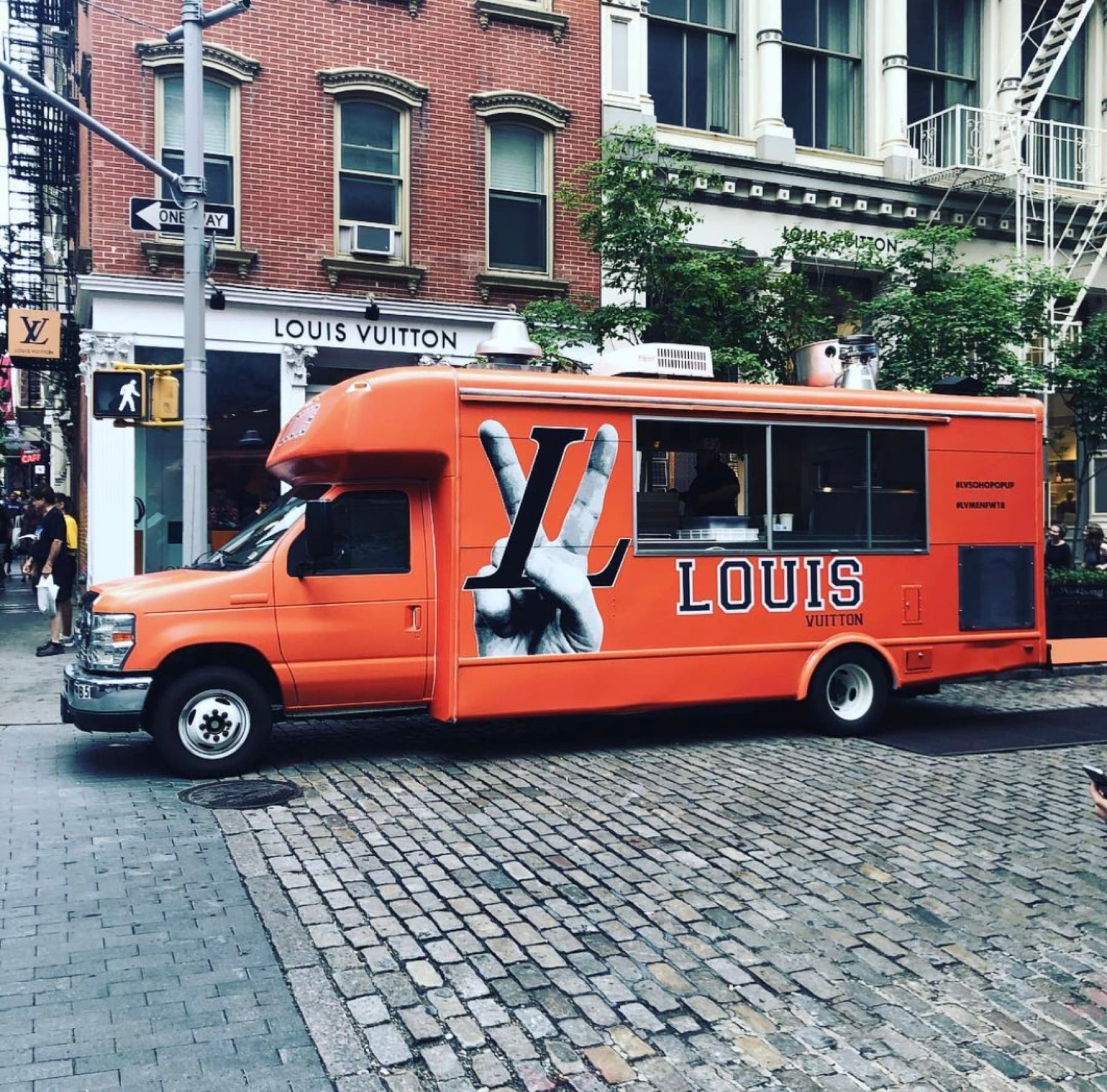
- What is a mobile pop-up shop?
- A mobile pop-up shop is a temporary store built on a vehicle, usually a truck, that is wrapped in the brand’s creative and staffed to sell or fit product from the kerb. It does what a leased pop-up does, gives an online or growing brand a physical presence for a few days, without the lease, and it moves between locations on one build.
- How much does a mobile pop-up shop cost?
- From $10,000 a day in New York for a wrapped, staffed, permitted retail truck, rising to around $45,000 with a heavy fit-out and a premium location. The wrap, $5,000–$15,000+, is a one-time cost, so a launch week costs far less per day than a single afternoon. Multi-day runs and tours start at $50,000.
- Can you sell product directly from the truck?
- Yes, and it changes the build and the permit. Payment at the window, product on display, and staff fitting or advising all need naming early, because retail from a vehicle on a New York street is a different permit from food service. Gifting from the truck with the sale made inside a partner store is the simpler version and the one we have run most.
- Can a mobile retail truck tour several cities?
- Yes. The wrap and the fit-out travel with the vehicle, so a second and third city cost the vehicle days and the permits, not the creative again. Tours across our service area and beyond are quoted as a run from $50,000, and the per-day rate drops across it.
- Is a mobile pop-up store better than a pop-up lease?
- For a launch, a takeover at an existing store, or a test of a new city, usually yes: it goes to the customer, it advertises on the way, and it pays only for the days it is open. For a shop that needs to stand in one place for two months, a lease is the better tool and we will say so.
- What retail brands does a store on wheels suit?
- Fashion, beauty, eyewear, footwear, DTC brands with an online-only problem, and any retailer with a launch or a holiday season to put on the pavement. The test is dwell time: if a customer needs a minute with the product, the truck wants a spot where people have a minute.